
Venous Ulcers
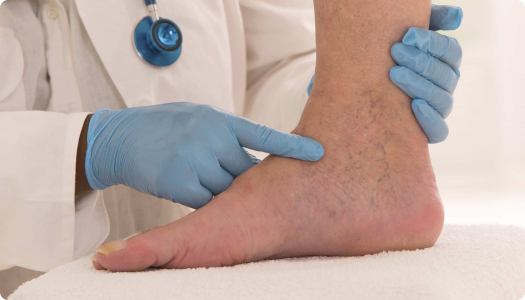
Venous Ulcers
Venous ulcers are wounds that are difficult to heal, commonly occurring on the legs, especially the lower legs. These ulcers develop due to problems in venous circulation and are often associated with varicose veins.
Symptoms
-
Wounds: Can cause open sores on the legs, usually around the ankle.
-
Pain and Discomfort: Persistent pain and discomfort in the affected area.
-
Swelling: Swelling and a feeling of heaviness in the foot or ankle.
-
Skin Changes: Discoloration and thickening of the skin in the affected area.
Causes
Factors leading to venous ulcers include:
-
Poor Venous Circulation: Inadequate venous circulation in the legs causes blood to pool and increases pressure.
-
Varicose Veins: Enlarged or damaged veins.
-
Previous Leg Injuries: Especially injuries affecting the veins.
Why does venous circulation deteriorate in the legs?
Problems in the calf muscle pump and the venous valve system are responsible.
Calf Muscle Pump
-
Role: Contraction of leg muscles, especially while walking, helps push blood in the leg veins back toward the heart.
-
Mechanism: When leg muscles contract, veins are compressed, promoting upward blood flow. When muscles relax, veins expand, maintaining circulation.
-
Effectiveness: Prolonged immobility (e.g., sitting or standing for long periods) reduces the efficiency of the calf muscle pump and leads to blood pooling in the legs.
Venous Valve System
-
Role: Venous valves ensure one-way blood flow, helping blood move toward the heart and preventing backflow into the legs due to gravity.
-
Structure: Valves in the veins allow upward flow while blocking downward flow.
-
Malfunction: Weak or damaged venous valves cause blood to pool in the legs, leading to venous circulation problems such as varicose veins and venous ulcers.
Treatment Options
Treatment of venous ulcers includes addressing the underlying venous problem and promoting wound healing:
-
Compression Stockings: Improve blood circulation and reduce swelling.
-
Wound Care: Proper cleaning, infection prevention, and care to promote healing.
-
Medication: Drugs to prevent infection and relieve pain.
-
Surgical Intervention: In some cases, surgery may be needed to improve venous circulation.
Prevention and Lifestyle Changes
-
Regular Exercise: Strengthen leg muscles and improve circulation.
-
Healthy Diet and Weight Management: Improve circulation and reduce venous pressure.
-
Leg Elevation: Elevate legs during daily activities to reduce blood pooling.